

2.4 Magnetic Variation and Navigation
Lesson Progress
Not completed
In the old days (before GPS), the magnetic compass was the main instrument used to navigate by pilotage.
Unlike a GPS, the magnetic compass does not point to geographical North (True North), but to Magnetic North. Pilots therefore had to translate headings from magnetic to true, and vice versa. You still need to do so because it’s examinable.
1. The Earth’s Magnetic Field
The Earth is a magnet with a north and south magnetic pole. Lines of force flow between these poles, creating a magnetic field that surrounds the Earth.
A compass needle is influenced by the Earth’s magnetic field and will lie parallel to one of these magnetic lines of force.
The magnetic poles are not co-located with the geographical poles (True North). Therefore, the north direction indicated by a compass is different from geographical north.
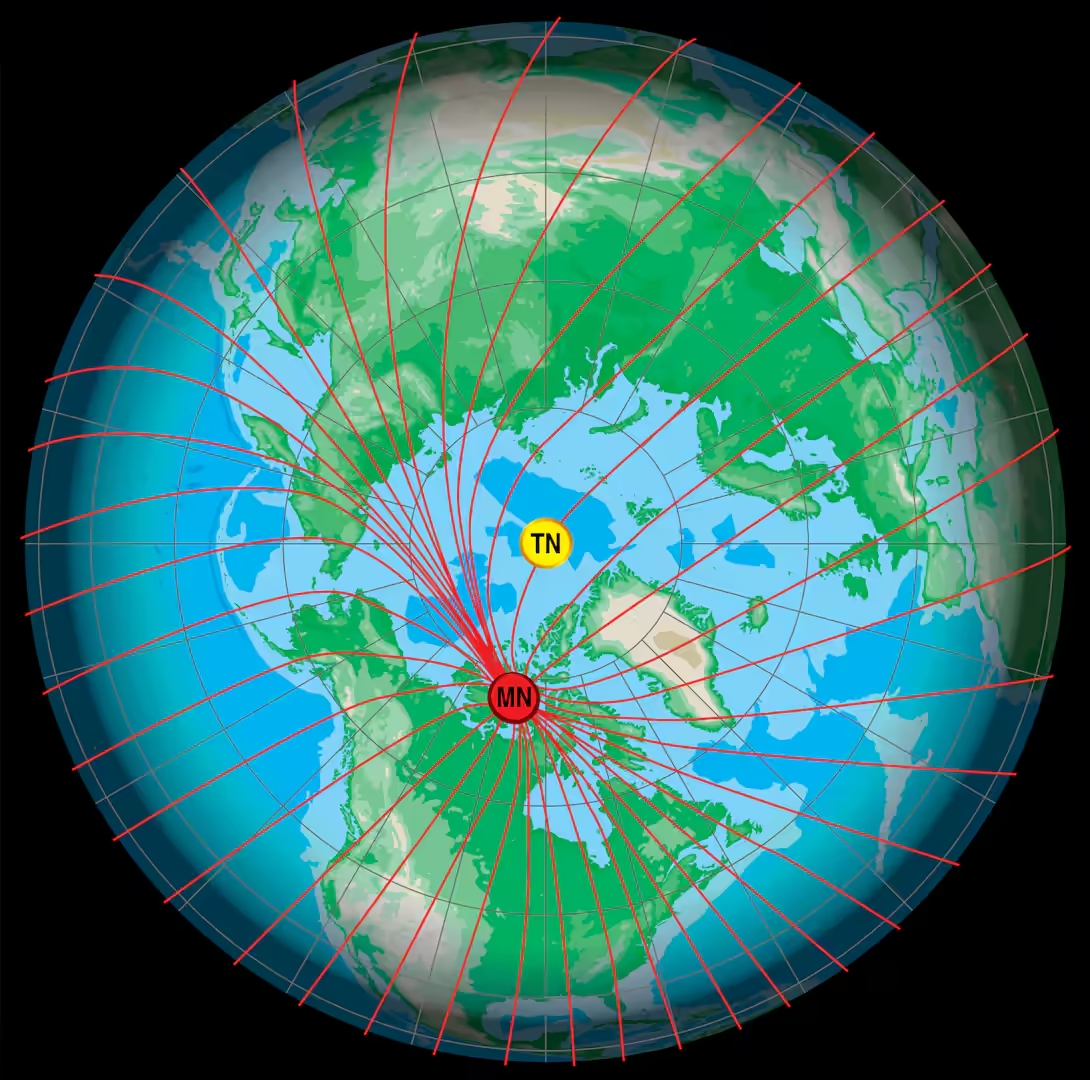
In the image above, TN represents True North and MN represents Magnetic North. The red lines are magnetic meridians. From these lines one can deternime the effect of local magnetic variations on a magnetic compass.
2. Magnetic Variation & Chart Lines
The angle between the direction indicated by the compass and the true geographical direction is called magnetic variation. This magnetic variation is indicated on VNCs so users can apply the required corrections.
Isogonic Lines
Isogonic lines are lines joining points that have the same magnetic variation.
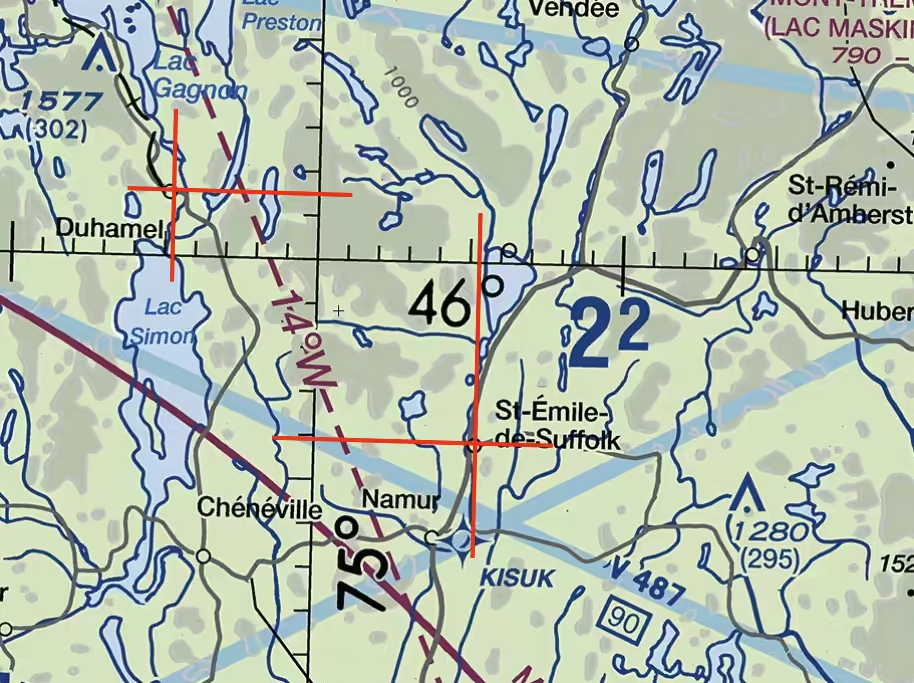
Check the VNC legend to see what isogonic lines look like (dashed curved magenta lines, roughly north to south).
The variation for a specific isogonic line is shown on the VNC along the line (for example, 14°W). You can see this in the VNC excerpt from section 2.3.
Agonic Line
The isogonic line with zero magnetic variation (the only line where True North is the same as Magnetic North) is called the Agonic line.
3. Converting Headings
If the magnetic pole lies west of the geographical pole from a given point, the compass needle points west of True North, so the variation is westerly.
If the compass needle points east of True North, the variation is easterly.
To convert magnetic headings to true headings, subtract westerly variation or add easterly variation. To convert true headings to magnetic headings, do the opposite.
You can use the mnemonic “East is Least, West is Best” to remember which operation to perform.
West Variation
- True Heading = Magnetic Heading - West variation
- Magnetic Heading = True Heading + West variation
East Variation
- True Heading = Magnetic Heading + East variation
- Magnetic Heading = True Heading - East variation
Example: A magnetic heading of 135° near the 13°W isogonic line means a true heading of 135° - 13° = 122°.
Magnetic Variation Practice
Use this interactive tool to practice converting between true headings and magnetic headings.
Magnetic Variation Tool
Conversion
Magnetic variation
Enter 0 to 359 degrees.
Result
Magnetic Heading (MH): 104°
MH = TH + Variation
MH = 90° + 14° = 104°
- Magnetic North (14°W)
- True Heading (90°)
- Magnetic Heading (104°)
Flight note: A compass is most reliable in steady, level flight. Turns and acceleration can cause errors.